
In the early stages of building a real estate agency, the founder often becomes the brand. Clients request meetings with the owner, trust the founder’s expertise, and choose the company because of a personal reputation built over years of successful transactions. This approach is highly effective for generating momentum, but it creates a significant challenge when the business begins to grow.
At some point, every successful agency faces the same question: How can the company continue to scale if every important client insists on working only with the founder?
Many agencies unknowingly become trapped by their own success. The founder becomes the primary salesperson, negotiator, marketer, content creator, and public face of the business. Revenue grows, but so does dependency on one individual. The business stops being a scalable company and becomes a highly demanding personal practice.
Building a strong agency brand without diminishing the founder’s personal brand is one of the most important strategic decisions for long-term growth. When executed correctly, clients continue to trust the company regardless of which agent manages their transaction.
This article explores practical strategies for balancing personal branding with corporate branding while ensuring seamless client experiences and sustainable business expansion.
Why Founder Dependency Limits Growth
Founder-led agencies often enjoy rapid early success because clients naturally trust a visible expert. However, this model creates several risks.
If the founder becomes unavailable due to illness, travel, or personal commitments, business activity slows significantly.
As transaction volume increases, response times become longer.
Potential clients may leave simply because they cannot schedule a meeting with the founder.
Recruiting talented agents also becomes more difficult when every major decision remains centralized.
Most importantly, the agency itself struggles to develop an independent identity.
A scalable business should continue operating successfully even when the founder is absent for several weeks.
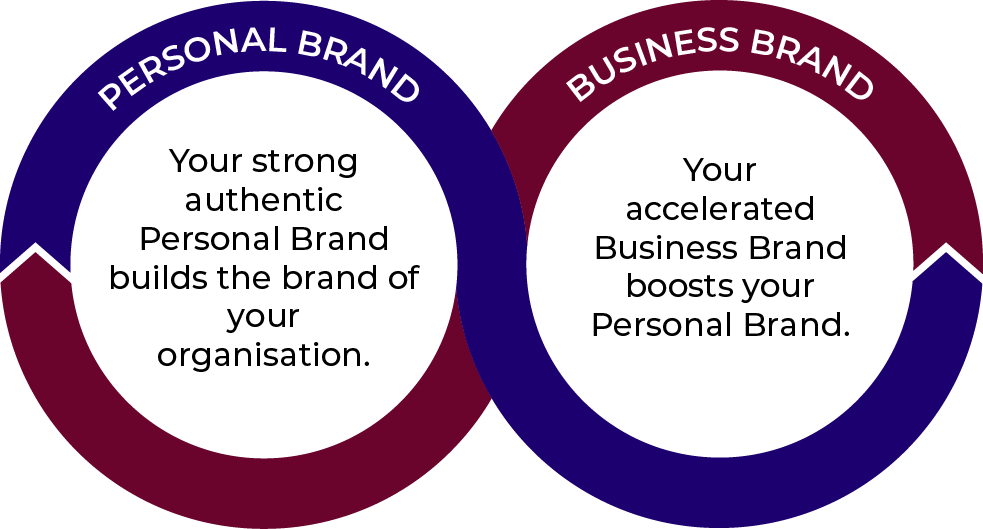
Personal Brand and Agency Brand Are Not Competitors
Many agency owners mistakenly believe they must choose between promoting themselves and promoting their company.
In reality, the strongest real estate businesses develop both simultaneously.
The founder serves as the trusted industry expert.
The agency represents the systems, team, standards, and client experience.
Clients initially discover the founder but ultimately place their confidence in the organization.
The transition happens naturally when branding is intentional.
Understanding the Difference
Personal Brand
A personal brand is built around an individual’s expertise, personality, communication style, reputation, and leadership.
People follow the founder because they trust their knowledge.
Examples include:
- Market insights
- Public speaking
- Educational videos
- Industry commentary
- Media interviews
- Professional networking
The founder becomes the face of authority.
Agency Brand
The agency brand represents something much larger.
It communicates:
- Company values
- Service standards
- Team expertise
- Marketing quality
- Operational excellence
- Client experience
- Long-term reliability
Clients should feel confident that every team member delivers the same level of professionalism.
The Goal: Build Trust in the System
One of the biggest fears agency owners face is hearing a client say:
“I only want to work with the founder.”
This usually indicates that clients trust the individual but not the organization.
The objective is to shift that perception.
Instead of believing:
“The founder is exceptional.”
Clients should think:
“This agency consistently hires exceptional professionals.”
That subtle difference determines whether a business can scale successfully.
Create a Recognizable Service Framework
One of the most effective ways to transfer trust from an individual to a company is by developing a signature client experience.
Every client should follow the same structured journey regardless of which agent they work with.
For example:
Step 1
Initial strategy consultation.
Step 2
Property valuation and market analysis.
Step 3
Customized marketing presentation.
Step 4
Professional media production.
Step 5
Buyer qualification.
Step 6
Negotiation strategy.
Step 7
Closing coordination.
Step 8
Post-sale support.
When every process follows consistent standards, clients begin trusting the system instead of relying solely on one individual.
Introduce Team Members Early
Many founders unintentionally create dependence by handling every client interaction themselves.
Instead, involve other agents from the very beginning.
For example:
“I’d like you to meet Sarah, our Luxury Property Specialist. She’ll oversee your marketing campaign while I remain involved in the overall strategy.”
This approach communicates two important messages:
The founder remains engaged.
The specialist is fully trusted.
Confidence transfers naturally.
Position Agents as Experts
Clients should never feel they are being “handed off.”
Instead, they should feel they are being introduced to the best person for their specific needs.
Examples include:
Luxury Property Advisor
Investment Property Consultant
Waterfront Specialist
International Buyer Advisor
Commercial Real Estate Strategist
Specialization creates authority.
Authority creates trust.
Develop Team Visibility
Many agencies unintentionally hide their agents behind the founder.
Instead, make every professional visible.
Feature them through:
- Individual biographies
- Professional photography
- Market commentary
- Educational articles
- Social media videos
- Podcast interviews
- Local events
- Community involvement
Clients become familiar with multiple experts before making contact.
Shift Marketing from “Me” to “We”
Personal branding often relies on statements like:
“I sold this property.”
“I negotiated this deal.”
“I helped this family relocate.”
As the agency grows, gradually shift language toward collaboration.
Examples include:
“Our team developed a comprehensive marketing strategy.”
“Our agency successfully connected the property with qualified international buyers.”
“Our specialists coordinated every stage of the transaction.”
The founder remains visible while reinforcing the strength of the organization.
Create Shared Thought Leadership
Educational content should not come exclusively from the founder.
Encourage experienced agents to contribute.
Possible content includes:
- Market updates
- Neighborhood guides
- Investment analysis
- Design trends
- Financing advice
- Legal considerations
Clients begin recognizing expertise throughout the company.
Build Internal Standards
Scaling becomes impossible without consistency.
Develop documented procedures for:
- Client communication
- Listing presentations
- Property photography
- Marketing campaigns
- Negotiation processes
- Follow-up schedules
- Closing procedures
Standardization ensures that every client receives a premium experience.
Maintain Founder Involvement Strategically
Scaling does not mean disappearing.
Instead, redefine the founder’s role.
Focus on:
- Strategic consultations
- High-value negotiations
- Media appearances
- Industry partnerships
- Leadership development
- Vision and culture
Allow trained agents to manage day-to-day client relationships.
Clients still benefit from the founder’s expertise without creating operational bottlenecks.
Building a Culture Clients Can Feel
Strong agency brands extend beyond marketing.
Culture becomes part of the customer experience.
Clients notice when:
- Team members collaborate.
- Communication remains consistent.
- Problems are resolved quickly.
- Everyone understands company values.
A healthy internal culture strengthens external trust.
Handling Client Resistance
Some clients will still request the founder directly.
Avoid saying:
“I’m too busy.”
Instead explain:
“Our process is designed so every client benefits from the combined expertise of our entire team. I’ll remain involved throughout the strategy while your dedicated advisor manages every detail personally.”
This reassures clients that they receive more—not less—support.
Measuring Successful Brand Transition
Several indicators demonstrate whether trust is shifting toward the agency.
Track metrics such as:
- Percentage of clients working directly with agents
- Founder involvement per transaction
- Referral rates
- Repeat business
- Client satisfaction scores
- Team-generated revenue
- Agent retention
- Average response time
Healthy businesses gradually reduce founder dependency without reducing client satisfaction.
Common Mistakes
Many agency owners unintentionally slow their own growth.
Avoid these mistakes:
- Approving every decision personally.
- Appearing in every advertisement.
- Taking credit for every success.
- Failing to showcase team expertise.
- Hiring agents without structured onboarding.
- Allowing inconsistent client experiences.
- Keeping knowledge inside the founder’s head instead of documenting systems.
- Building marketing around personality rather than company values.
These habits make scaling far more difficult.
Long-Term Benefits of an Agency-First Brand
When clients trust the organization as much as the founder, the business becomes significantly stronger.
Benefits include:
- Greater scalability
- Higher company valuation
- Improved work-life balance for leadership
- Better recruitment opportunities
- Increased client capacity
- Stronger referral networks
- Consistent service quality
- Sustainable long-term growth
Most importantly, the agency evolves from being personality-driven to becoming a respected institution within its market.
Conclusion
A successful founder’s personal brand is often the catalyst that launches a real estate agency, but sustainable growth depends on building something larger than one individual. The goal is not to reduce the founder’s visibility but to transform personal credibility into organizational trust.
By developing standardized client experiences, positioning agents as specialists, showcasing team expertise, documenting operational systems, and gradually shifting marketing from “I” to “we,” agency leaders can scale confidently without sacrificing service quality or client relationships.
The strongest real estate brands are those where clients initially arrive because of the founder’s reputation—but remain loyal because every member of the team consistently delivers the same exceptional level of expertise, professionalism, and care. That is the foundation of a business that continues to thrive long after it outgrows the personality that started it.